

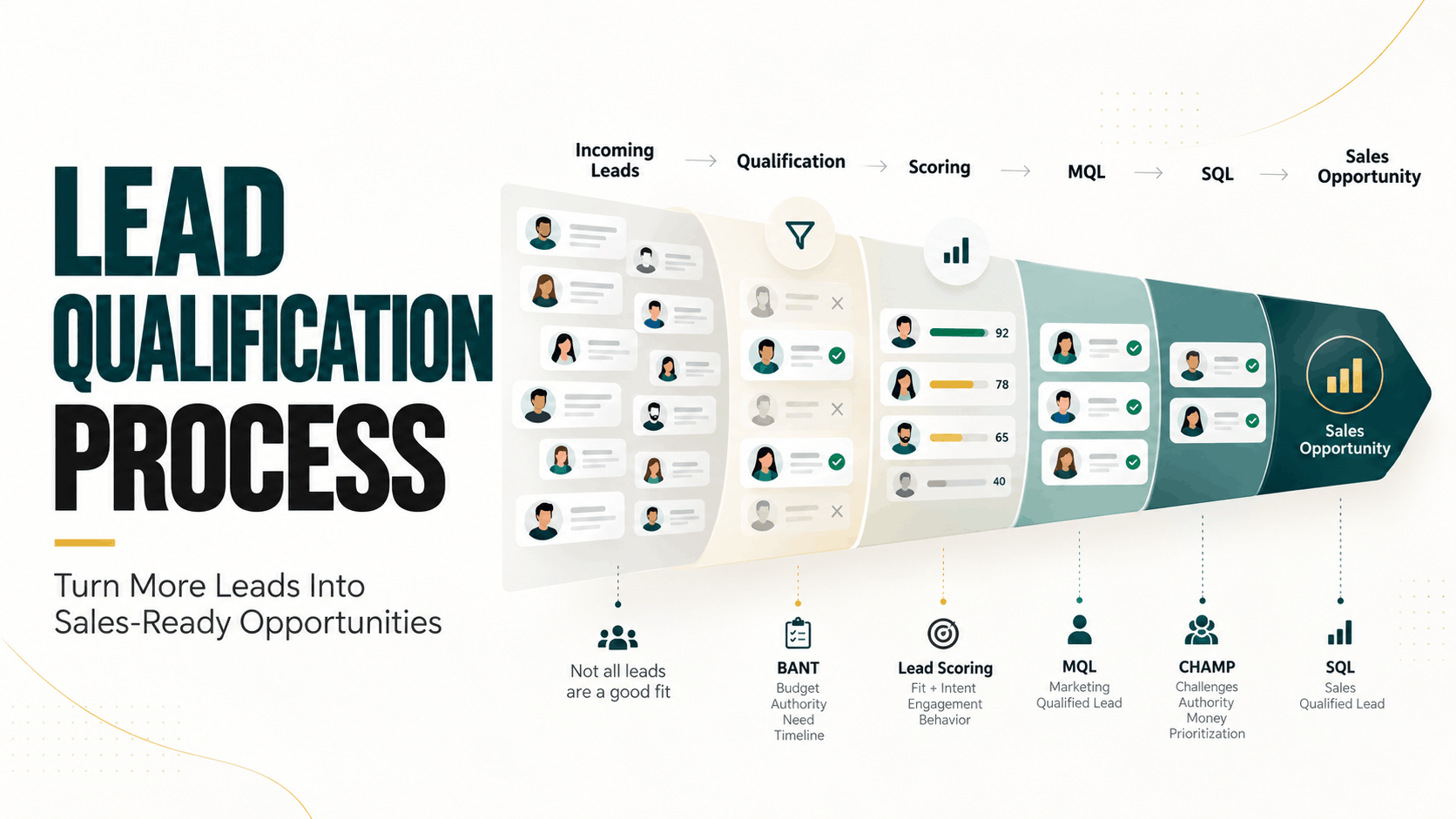
Every lead costs money to get. Yet sales teams waste time on people who will never buy. You must fix this gap. An efficient lead qualification process helps you locate high-quality leads quickly. Your sales staff will be able to concentrate only on potential customers.
Filtering out cold prospects early protects your ad budget. This guide shows you how to sort leads and close deals faster.
What Is the Lead Qualification Process?
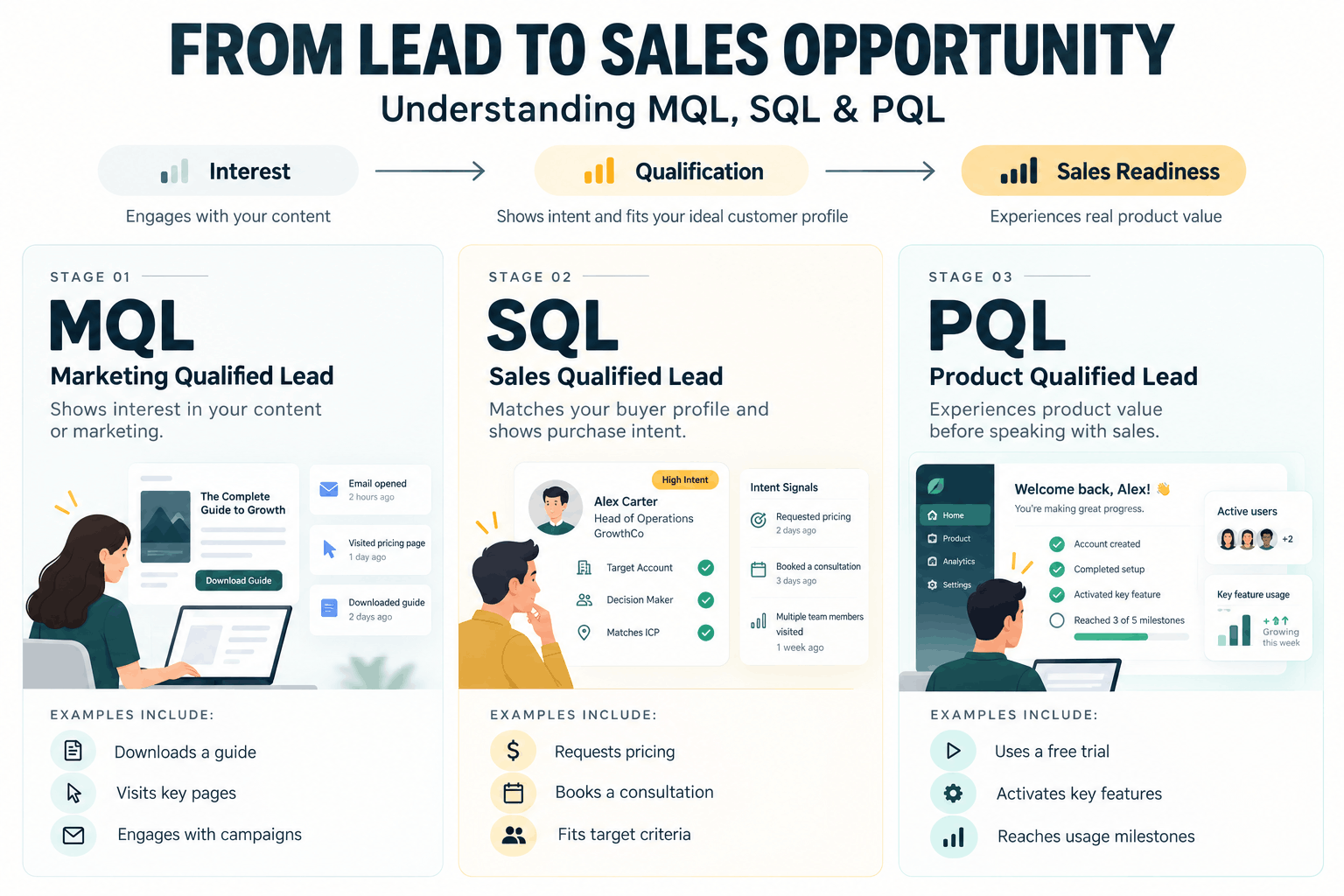
The lead qualification process checks if a prospect has the interest and money to buy. You sort buyers into three main groups:
- Marketing Qualified Leads (MQLs): People who download content or click your links.
- Sales Qualified Leads (SQLs): People who fit your target profile and ask for pricing.
- Product Qualified Leads (PQLs): People who try your free software and use key features.
Why Lead Qualification in Digital Marketing Matters
Lead qualification in digital marketing helps to fill the chasm between clicks on ads and actual sales. The marketing team generates traffic, but the sales team needs leads. Teams using targeted lead generation Malaysia services get better results by setting clear filters.
Winning More Often: Only speak to people who require your service.
Saving Money: No more spending money advertising to the wrong people.
Faster Sales Cycle: Qualified leads move more quickly through the sales process.
Better Coordination: Sales and marketing are in agreement on what a qualified lead looks like.
Read our explanation why lead generation is important for business growth in Malaysia
Simple Frameworks to Score Leads
Sales teams use proven systems to check buyer fit quickly. Pick the one that fits your price point.
The BANT System
- Budget: Can the buyer pay for your service?
- Authority: Can this person sign the contract?
- Need: Does your product fix their main pain point?
- Timeline: When will they make a buying decision?
The CHAMP System
- Challenges: What problem needs a fix right now?
- Authority: How does the company buy new tools?
- Money: Is there cash set aside for this fix?
- Prioritization: How urgent is this project?
How to Build a Lead Scoring Model
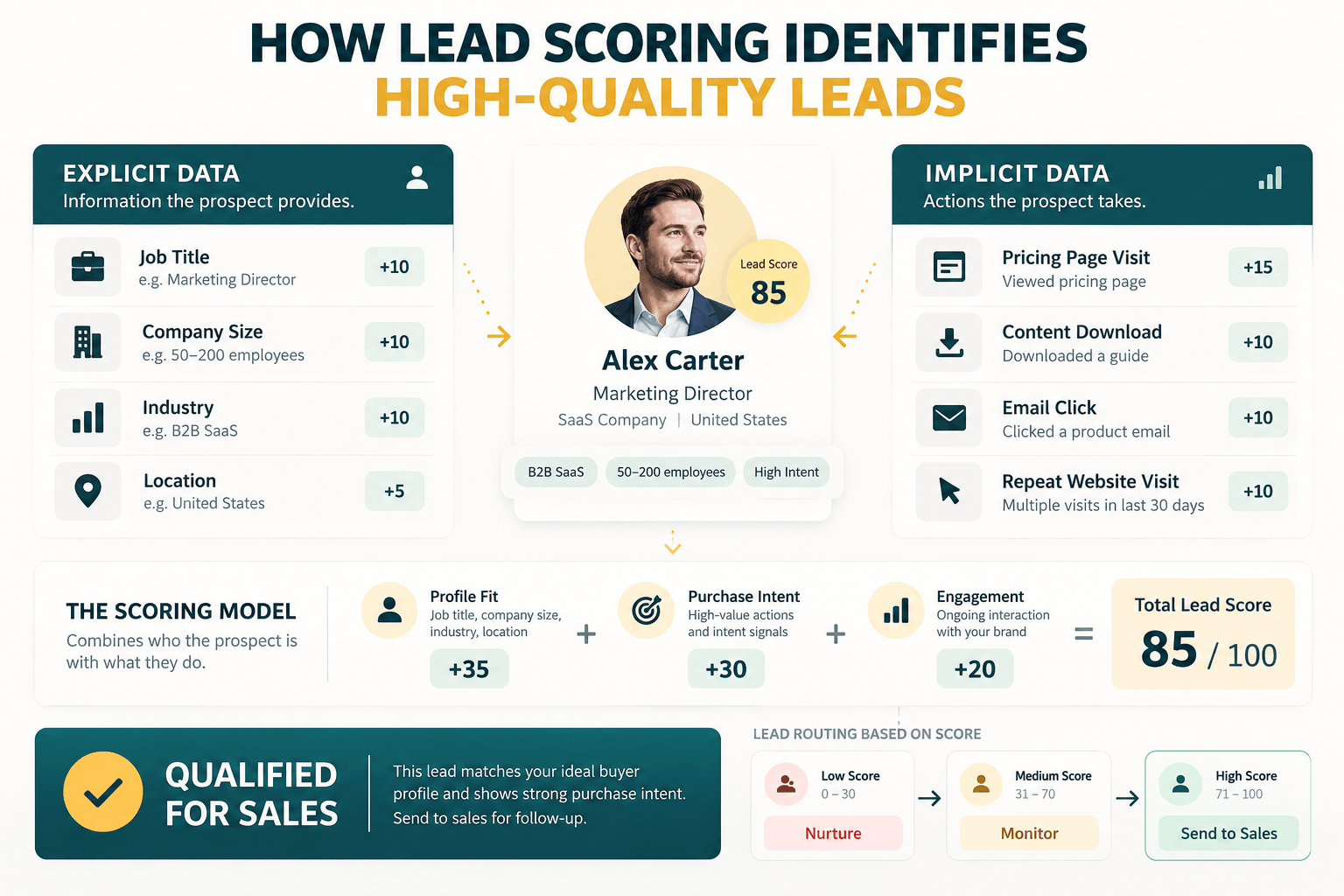
Lead scoring assigns points to each lead based on their actions and profile details.
Explicit Data
Information the user gives you directly:
- Job Title: Managers get higher points than interns.
- Company Size: Bigger firms often spend more money.
- Industry: Matching your target profile adds extra points.
Implicit Data
Actions the user takes on your website:
- Page Views: Visiting pricing pages shows strong interest.
- Downloads: Reading product guides adds to the score.
- Email Clicks: Opening emails shows active interest.
Combining Data Types for Accuracy
Combining explicit profile facts with implicit digital tracking creates a clear score for every prospect. Your CRM adds up these points automatically. When a lead reaches the designated point in your database, the system automatically hands the lead over to your sales team.
Platforms such as Google Ads can also distinguish between qualified leads and converted leads when offline sales data is connected to the advertising platform.
Having a lead nurturing system that routes hot leads straight to the sales team while leaving the cold leads to the marketing team is extremely beneficial. It allows sales reps to work with potential buyers only, while the other leads get nurturing emails automatically.
Step-by-Step Guide to Route Buyers
Set up a clear path for every incoming contact.
- Capture Details: Use short forms to gather basic contact info.
- Score Activity: Let your software track page visits automatically.
- Check Fit: Verify company size and location against your target list.
- Lead Handoff: Pass highly qualified leads directly to your sales department.
- Make the Call: Place a quick call to verify budget and schedule.
- Close or Nurture: Pitch ready buyers immediately. Put cold leads into an email list.
Common Mistakes That Hurt Sales
- Focusing Only on Volume: Getting thousands of poor leads just wastes time.
- Ignoring Bad Actions: You must subtract points when users stop opening emails.
- Slow Follow-Up: Calling a lead within five minutes yields the best results.
- Poor Communication: Sales and marketing must agree on lead definitions.
Conclusion
Sorting your leads protects your sales team from bad calls. Using a lead qualification process, you save money and grow your revenue faster. To build better ad campaigns and sales pipelines, work with the team at TheCreatives360.
Frequently Asked Questions
1. What is the lead qualification process in digital marketing?
The lead qualification process reviews incoming website leads to help your sales team focus strictly on top prospects.
2. How does lead qualification improve campaign return?
Using lead qualification in digital marketing cuts ad waste by pointing your budget toward channels that bring real revenue.
3. What sets an MQL apart from an SQL?
An MQL interacts with your content. An SQL meets your buyer criteria and asks to speak with sales.
4. How often should you update lead scores?
Review your scoring rules every three months to match changing buyer habits and deal data.
5. Why does quick follow-up matter?
Reaching out to leads fast keeps your brand top of mind before they contact competitors.